Achieving Natural-Looking Results: The Art of Hairline Design in FUE and DHI Transplants in Turkey
Achieving Natural-Looking Results: The Art of Hairline Design in FUE and DHI Transplants in Turkey
When you spot a “bad” hair transplant, you know it immediately. The hair might be thick, but something looks off—perhaps the hairline is too straight, too low, or looks like a doll’s head. Conversely, a great hair transplant is invisible. You might notice the person looks younger or fresher, but you can’t quite pinpoint why. The secret to this invisibility lies almost entirely in one millimeter-thin strip of the scalp: The Hairline.
In Istanbul, the global epicenter of hair restoration, the focus has shifted from simply moving as much hair as possible to the art of placement. Creating a hairline that mimics nature is not just a medical procedure; it is an architectural feat. This guide explores how top surgeons in Turkey combine the Golden Ratio, artistic intuition, and advanced technologies like FUE und DHI to design hairlines that are indistinguishable from the real thing.
The Science: Anatomy and the Golden Ratio
A natural hairline is never drawn by guesswork. It is determined by the unique geometry of your face. Leading surgeons in Turkey utilize the “Rule of Thirds” und die Golden Ratio (1.618)—principles used by Leonardo da Vinci—to calculate the perfect height for your forehead.
Balancing the Face
The face is visually divided into three equal sections: from the chin to the nose, the nose to the eyebrows, and the eyebrows to the hairline. If a surgeon places the hairline too low (a common mistake to reduce forehead size), it disrupts this balance and creates an unnatural, aggressive look. The goal is to restore the frame of the face, not to lower it to where it was when you were 16.
The Art: Macro and Micro Irregularities
Nature hates straight lines. If you look closely at a natural hairline, you will see it is jagged, random, and soft. Achieving this requires a two-tiered artistic approach:
Macro-Irregularity (The “Snail Track”): From a distance, the hairline should not look like it was drawn with a ruler. It should have a gentle, serpentine wave that flows with the temple peaks.
Micro-Irregularity (The “Zig-Zag”): Up close, the transition from forehead to hair must be gradual. Surgeons create tiny, intentional irregularities—placing hairs slightly in front of or behind the line—to mimic the random growth pattern of nature.
The Strategy: The “Single Graft” Rule
One of the biggest secrets to a soft hairline is graft selection. Hair follicles grow in groups of 1, 2, 3, or 4 hairs.
The Transition Zone: The very front row (the first 0.5 to 1 cm) must consist exclusively von single-hair grafts. These are often the finest, thinnest hairs extracted from the nape of the neck. Placing a thick, multi-hair graft in the front row results in the dreaded “pluggy” or “toothbrush” look.
The Defined Zone: Behind this soft transition zone, the surgeon places the 2- and 3-hair grafts to build density and volume. This gradient creates the illusion of depth.
The Tools: Sapphire FUE vs. DHI
The vision is artistic, but the execution is technical. In Turkey, two primary methods are used to construct these high-definition hairlines.
Sapphire FUE: The Architect’s Tool
Unter Sapphire FUE, the surgeon uses a V-shaped blade made of real sapphire crystal to open micro-channels before implantation.
Why it helps: The sapphire blade allows for tighter packing and precise control over the Richtung of the hair. It is ideal for creating the sharp, forward-facing angles required for the front hairline.
Why it helps: The Choi pen offers ultimate control over the Winkel und depth simultaneously. It is often preferred for recreating the delicate “cowlicks” or swirls in the hairline, or for placing hairs between existing strands without shaving the head.
Why Turkey Masters the Art
Why do patients fly to Istanbul specifically for this design work? It comes down to “Muscle Memory.” A surgeon in Europe might design two hairlines a week; a top surgeon in Turkey designs two a day. This high volume leads to an intuitive understanding of facial aesthetics across diverse ethnicities, head shapes, and hair types. Organizations like the Internationale Gesellschaft für Haarwiederherstellungschirurgie (ISHRS) emphasize that experience is the single most critical factor in cosmetic outcomes.
Conclusion: Your Hairline is Your Signature
A hair transplant is permanent, and your hairline is its most visible signature. It frames your eyes, defines your age, and influences your confidence. In Istanbul, the convergence of artistic vision and medical precision ensures that your new hairline will not just grow, but fit your face perfectly for decades to come. Don’t settle for a straight line; choose a masterpiece. To get a free analysis of your facial proportions and a custom hairline design, kontaktieren Sie uns heute.
Häufig gestellte Fragen (FAQ)
Can I choose a lower hairline?
You can express your preference, but a responsible surgeon will advise you on the limits. Lowering the hairline too much requires a huge number of grafts and can look unnatural as you age. The best design balances your current desire with your future appearance.
Will the hairline look natural immediately?
No. Initially, there will be scabs and redness. The “real” look begins to emerge after the transplanted hairs shed and regrow, typically around month 4-6, with the full soft density visible at 12 months.
What happens if my hairline continues to recede behind the transplant?
This is why planning is crucial. Surgeons often place grafts into the existing thinning hair (blending) to future-proof the result. Medication may also be recommended to stabilize natural hair loss.
Is DHI better for hairline design than FUE?
Both can achieve perfect results. DHI is often slightly better for controlling the exact angle of exit for the very front hairs, but Sapphire FUE is excellent for dense packing. The surgeon’s skill matters more than the tool.
Does a “Widow’s Peak” look natural?
Yes, for many men, a slight widow’s peak is a natural feature. If you had one naturally, your surgeon can recreate it to maintain your original look.


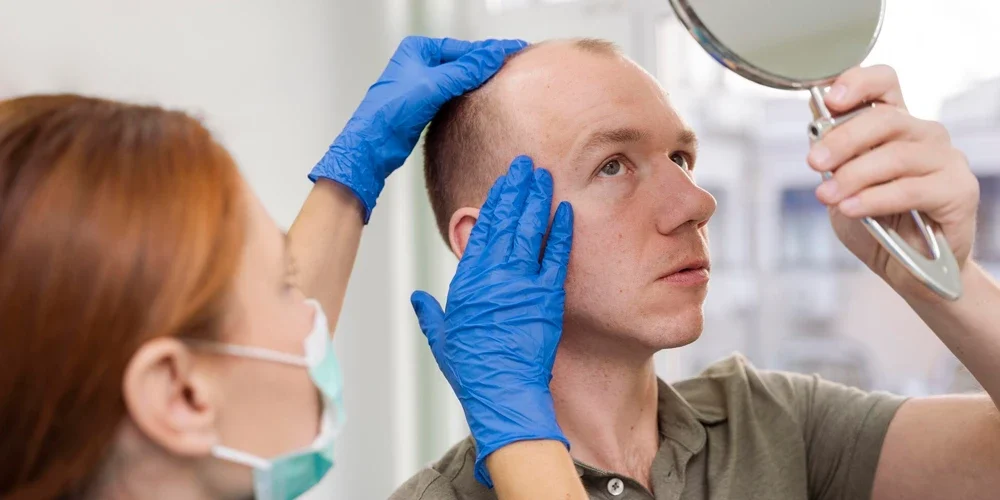 When you spot a “bad” hair transplant, you know it immediately. The hair might be thick, but something looks off—perhaps the hairline is too straight, too low, or looks like a doll’s head. Conversely, a great hair transplant is invisible. You might notice the person looks younger or fresher, but you can’t quite pinpoint why. The secret to this invisibility lies almost entirely in one millimeter-thin strip of the scalp: The Hairline.
In Istanbul, the global epicenter of hair restoration, the focus has shifted from simply moving as much hair as possible to the art of placement. Creating a hairline that mimics nature is not just a medical procedure; it is an architectural feat. This guide explores how top surgeons in Turkey combine the Golden Ratio, artistic intuition, and advanced technologies like FUE und DHI to design hairlines that are indistinguishable from the real thing.
When you spot a “bad” hair transplant, you know it immediately. The hair might be thick, but something looks off—perhaps the hairline is too straight, too low, or looks like a doll’s head. Conversely, a great hair transplant is invisible. You might notice the person looks younger or fresher, but you can’t quite pinpoint why. The secret to this invisibility lies almost entirely in one millimeter-thin strip of the scalp: The Hairline.
In Istanbul, the global epicenter of hair restoration, the focus has shifted from simply moving as much hair as possible to the art of placement. Creating a hairline that mimics nature is not just a medical procedure; it is an architectural feat. This guide explores how top surgeons in Turkey combine the Golden Ratio, artistic intuition, and advanced technologies like FUE und DHI to design hairlines that are indistinguishable from the real thing.
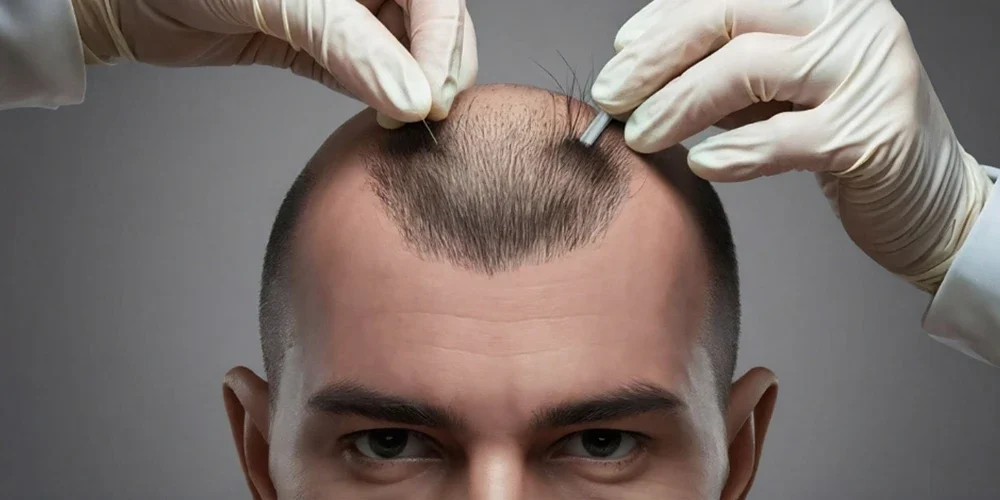 The vision is artistic, but the execution is technical. In Turkey, two primary methods are used to construct these high-definition hairlines.
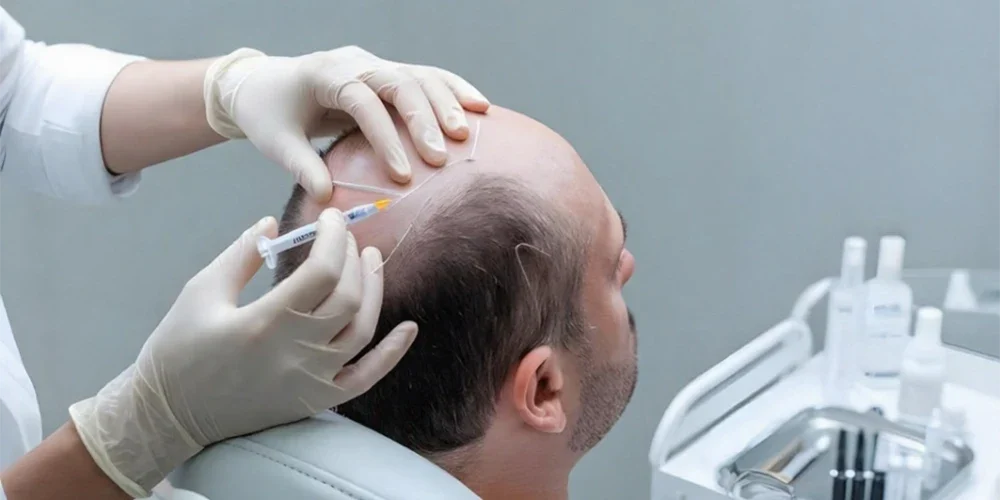 A hair transplant is permanent, and your hairline is its most visible signature. It frames your eyes, defines your age, and influences your confidence. In Istanbul, the convergence of artistic vision and medical precision ensures that your new hairline will not just grow, but fit your face perfectly for decades to come. Don’t settle for a straight line; choose a masterpiece. To get a free analysis of your facial proportions and a custom hairline design, kontaktieren Sie uns heute.

 English
  Italian
  French
  German
  Arabic