
Emax Crowns for Front Teeth: The Ultimate Choice for Translucency and Natural Aesthetics
When it comes to restoring the teeth that are most visible when you smile, the stakes are high. Front teeth—the “social six”—require more than just strength; they demand a material that can perfectly mimic the delicate way light interacts with natural enamel. For years, patients had to choose between durability and beauty. Today, the Emax Crown has eliminated that compromise, establishing itself as the undisputed gold standard for anterior restorations. Crafted from high-strength lithium disilicate, Emax offers an unmatched combination of durability and life-like translucency. This guide explores why Emax is the ultimate choice for front teeth and how top clinics in Istanbul are using this technology to create flawless, natural smiles.
The “Translucency Factor”: Why Emax Looks So Real
The primary reason cosmetic dentists recommend Emax for front teeth is its unique optical properties. Natural teeth are not solid blocks of color; they are translucent layers. Light passes through the enamel and reflects off the dentin underneath, creating a depth and vitality that is hard to replicate.
Mimicking Natural Enamel
Emax is a glass-ceramic. Its crystalline structure allows light to pass through it in a way that is almost identical to natural enamel. Unlike metal-fused porcelain crowns (PFM) which block light and can create a dull appearance, or some zirconia crowns which can look too opaque, Emax blends seamlessly with your surrounding teeth. It avoids the “flat” white look often associated with artificial caps, ensuring your smile looks vibrant and alive.
No “Grey Line” at the Gums
One of the biggest aesthetic drawbacks of traditional PFM crowns is the dreaded dark metal line that can appear at the gumline over time. Because Emax is 100% metal-free, this is impossible. Even if your gums recede slightly over the years, the margin will remain natural and undetectable.
Durability: Is Emax Strong Enough for Front Teeth?
While Emax is celebrated for its beauty, it is also surprisingly strong. With a flexural strength of around 360-500 MPa, it is significantly stronger than traditional feldspathic porcelain. This makes it more than durable enough to withstand the biting and tearing forces placed on front teeth during normal eating.
Emax vs. Zirconia for Front Teeth
This is a common comparison. Zirconium Crowns are incredibly strong (often 1000+ MPa) and are the preferred choice for back teeth (molars) where chewing forces are highest. However, high-strength zirconia can sometimes lack the delicate translucency needed for the very front teeth. Emax strikes the perfect balance: it is strong enough for the anterior region but aesthetically superior, making it the specialist’s choice for the smile zone.
Emax Veneers vs. Emax Crowns: Which Do You Need?
Both use the same beautiful material, but they serve different purposes. The choice depends on the condition of your natural tooth.
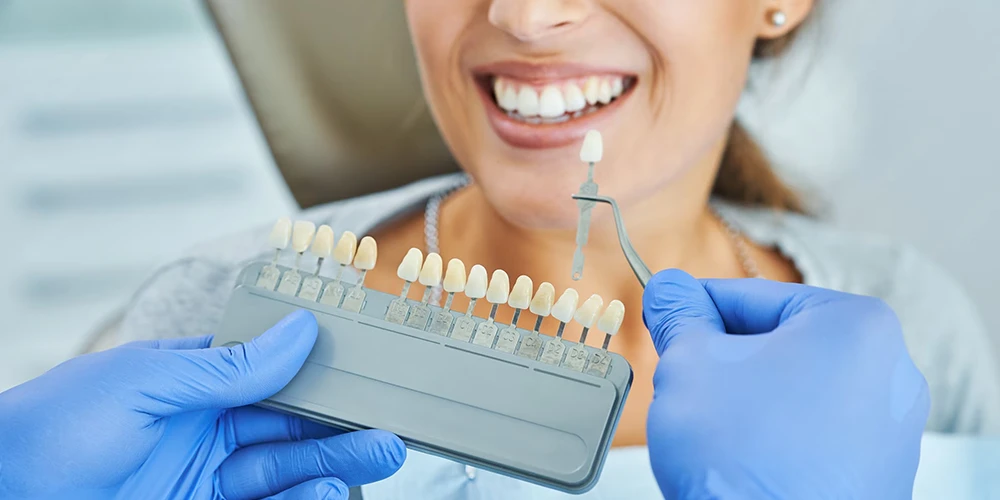
- Emax Veneers: These are ultra-thin shells bonded to the front surface of the tooth. They require very minimal preparation (shaving) of the natural tooth. They are ideal for correcting cosmetic issues like discoloration, minor chips, or gaps on healthy teeth.
- Emax Crowns: These cover the entire tooth like a cap. They require more preparation but offer greater structural support. They are the right choice if the tooth is significantly damaged, has a large filling, or has undergone a root canal.
The Istanbul Advantage: World-Class Aesthetics at an Accessible Cost
Istanbul has become a global hub for high-end cosmetic dentistry, attracting patients who want premium materials like Emax without the premium price tag found in the UK or US.
In-House Digital Design and Production
Leading clinics in Istanbul have invested heavily in digital dentistry. They use Digital Smile Design (DSD) software to plan your smile and in-house CAD/CAM milling machines to fabricate your Emax crowns on-site. This allows for incredible precision and a faster turnaround, often completing a full smile makeover in just 5-7 days.
Cost Comparison
Emax is a premium, branded material. In the UK or US, a single Emax crown can cost upwards of $1,000 – $1,500. In Istanbul, due to lower operational costs, the price for the exact same genuine Ivoclar Vivadent Emax crown is significantly lower, often ranging from $250 – $400. This allows patients to afford a full smile makeover with the best materials available.
Conclusion: The Clear Winner for Your Smile
For front teeth, where aesthetics are paramount, Emax crowns offer a solution that is unrivaled in its ability to mimic nature. They provide the confidence of strength with the beauty of natural translucency. By choosing a reputable clinic in Istanbul, you can access this elite level of dentistry, combined with cutting-edge digital technology, at a fraction of the global cost. If you are looking to transform your smile with the most natural-looking material on the market, Emax is the ultimate choice. To see if you are a candidate, contact us for a consultation.
Frequently Asked Questions (FAQ)
- Do Emax crowns stain?
No. Emax is a highly glazed, high-density ceramic that is very resistant to staining from coffee, tea, or wine. With proper hygiene, they maintain their brightness for many years. - How long do Emax crowns last?
With proper care (brushing, flossing, and regular check-ups), Emax crowns typically last 10-15 years or longer. Their longevity is comparable to other high-quality dental restorations. - Can Emax be used for a dental bridge?
Emax is generally recommended for single crowns or short-span bridges (replacing one missing tooth) in the front of the mouth. For longer bridges or back teeth, Zirconia is usually preferred for its higher fracture resistance. - Is the procedure painful?
No. The preparation of the tooth is done under local anesthesia, so you will not feel pain. Some minor sensitivity to hot/cold is normal for a few days after the final fitting but subsides quickly. - How do I know if I need a crown or a veneer?
This is determined by the amount of healthy tooth structure remaining. If the tooth is mostly intact and the goal is purely cosmetic, a veneer is often best. If the tooth is weak, broken, or heavily filled, a crown provides necessary structural reinforcement.

 English
  Italian
  French
  German
  Arabic