
FUE vs. DHI in Istanbul: Choosing the Right Hair Transplant Technique for Your Needs
For anyone considering hair restoration, Istanbul represents the global gold standard—a city where medical expertise, advanced technology, and artistic vision converge. However, once you have decided on the destination, you are often faced with a technical question that can be confusing: Should I choose FUE or DHI?
These two acronyms dominate the industry, and while they are often presented as rivals, they are actually different tools designed for different purposes. Understanding the nuances between FUE (Follicular Unit Extraction) and DHI (Direct Hair Implantation) is the key to achieving your specific aesthetic goals. This expert guide breaks down the technical differences, advantages, and ideal candidates for each method, helping you navigate your options with confidence in Istanbul’s world-class clinics.

The Common Ground: How the Hair is Harvested
Before diving into the differences, it is crucial to clear up a common misconception. In modern hair transplantation, the extraction method is identical for both FUE and DHI. Both techniques utilize the FUE method to harvest grafts. This involves using a motorized micropunch to extract individual hair follicles from the donor area (the back and sides of the head) one by one. This ensures minimal scarring and a quick recovery for the donor zone. The difference—and the debate—lies entirely in the second phase: implantation.
Sapphire FUE: The Two-Step Precision Master
When people refer to “FUE” in Istanbul today, they are almost exclusively referring to Sapphire FUE. This is the modern evolution of the classic technique.
The Process
Sapphire FUE is a two-step implantation process:
- Canal Opening: After the grafts are harvested, the surgeon uses a blade made from a precious sapphire gemstone to create thousands of tiny incisions (canals) in the recipient area. These canals determine the angle, direction, and density of the new hair.
- Implantation: Once all canals are open, a team of technicians carefully places the harvested grafts into these pre-made incisions using fine forceps.
Why Choose Sapphire FUE?
Sapphire FUE is the king of volume. It is the preferred method for patients with extensive hair loss (Norwood Stage 4 and above) because it allows the surgical team to cover large areas efficiently. The sapphire blade creates V-shaped incisions that are smaller and cleaner than traditional steel blades, allowing for denser packing and faster healing. If you need 3,500 to 5,000 grafts in a single session to cover a bald crown and frontal area, Sapphire FUE is often the superior choice.
DHI: The One-Step Artistic Refiner
DHI stands for Direct Hair Implantation. It eliminates the need for pre-made incisions by using a specialized tool called the Choi Implanter Pen.
The Process
DHI combines the canal opening and implantation into a single, fluid motion:
- Loading: A technician carefully loads each individual graft into the hollow needle of the Choi Pen.
- Direct Implantation: The surgeon presses the pen against the scalp. The needle penetrates the skin to create the channel, and as the plunger is pressed, the graft is deposited directly into the scalp.
Why Choose DHI?
DHI is the master of precision and density preservation. Because the pen is so slender, it allows the surgeon to implant new hairs between existing hairs without damaging them. This makes it the ultimate choice for patients who are not completely bald but want to increase density in thinning areas. It also offers the significant advantage of the “No-Shave” option, where the recipient area does not need to be shaved, making it highly popular for female patients and men who wish to return to work immediately.
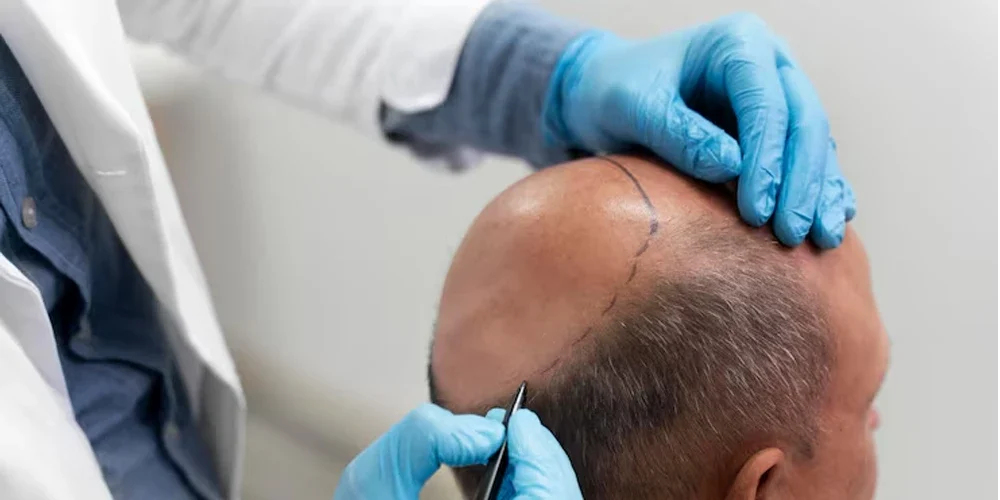
Head-to-Head Comparison: Which Technique Wins?
To help you decide, here is a direct comparison of the factors that matter most to patients:
1. Graft Volume and Coverage
Winner: Sapphire FUE. Because the team can work simultaneously on placement, FUE is faster for massive graft numbers. DHI is more labor-intensive and slower; therefore, “mega-sessions” (4000+ grafts) take significantly longer with DHI and may be split over two days.
2. Recovery and Healing
Winner: Tie (with a slight edge to DHI). Both techniques are minimally invasive. Sapphire FUE causes very little trauma due to the gemstone blade. However, DHI theoretically reduces the time grafts spend outside the body (ischemia time) and minimizes bleeding, potentially leading to slightly faster crust healing.
3. The “Unshaven” Option
Winner: DHI. This is DHI’s superpower. Performing a Sapphire FUE transplant generally requires shaving the recipient area to create precise canals. DHI allows for implantation without shaving the top of the head, offering a discreet recovery.
4. Cost
Winner: Sapphire FUE (More Affordable). DHI requires expensive, single-use Choi pens and a larger, highly specialized team to load them rapidly. Consequently, DHI procedures in Istanbul are typically priced higher than Sapphire FUE procedures.
The Istanbul Verdict: It’s Not About “Better,” It’s About “Fit”
Leading hair restoration bodies like the International Society of Hair Restoration Surgery (ISHRS) emphasize that the skill of the surgeon is more important than the tool. In Istanbul, the best clinics offer both techniques because they serve different needs.
- You are the ideal candidate for Sapphire FUE if: You have a large area of baldness to cover, you need maximum graft count, and you are comfortable shaving your head for the procedure.
- You are the ideal candidate for DHI if: You have thinning hair and want to add density without damaging existing follicles, you need a precise hairline reconstruction, or you absolutely do not want to shave your recipient area (typical for women or executives).
Conclusion: A Personalized Approach to Restoration
Whether you choose the high-volume efficiency of Sapphire FUE or the delicate precision of DHI, choosing Istanbul ensures you are accessing the world’s most experienced surgeons in both techniques. The “right” technique is the one that aligns with your level of hair loss, your lifestyle, and your budget. Do not get lost in the acronyms; instead, consult with a specialist who can assess your scalp and recommend the tool that will build your perfect result. To get a professional assessment of which technique suits you, contact our team today.
Frequently Asked Questions (FAQ)
- Is DHI more painful than FUE?
No. Both procedures are performed under local anesthesia, so you will feel no pain during the operation. Post-operative discomfort is minimal for both, usually managed with mild painkillers for 1-2 days. - Does DHI provide a more natural look?
Both techniques can provide a 100% natural look in the hands of an expert. However, DHI offers slightly more control over the angle of implantation, which can be advantageous for complex whorls or the very front line of the hairline. - Can I combine both techniques?
Yes, “Hybrid” transplants are becoming popular in Istanbul. A surgeon might use Sapphire FUE to densely pack the large balding crown area and then use DHI to delicately refine the hairline and blend into existing hair. - Why is DHI more expensive?
DHI utilizes the patented Choi Implanter Pens, which are costly medical devices. Furthermore, the procedure requires a larger team of nurses to load the pens in real-time, increasing the operational cost. - Will I have scars with either method?
Both FUE and DHI are considered “scarless” surgeries because they do not involve cutting a strip of skin. They leave tiny, dot-like micro-scars in the donor area that are virtually invisible to the naked eye, even with short hair.

 English
  Italian
  French
  German
  Arabic