
Hair Therapy vs. Hair Transplant in İstanbul: A Guide to Making the Right Choice
Embarking on a hair restoration journey in İstanbul is an exciting step, but it begins with a fundamental decision that will shape your entire experience and outcome: Should you pursue a course of advanced hair therapy, or is it time for a definitive hair transplant procedure? This is not a question of which option is “better,” but rather, which solution is precisely engineered to solve your specific problem. The world-class clinics of İstanbul offer a complete spectrum of treatments, but navigating them requires a clear understanding of their purpose. This guide will serve as your roadmap, comparing the core goals, ideal candidates, and processes of both paths to help you make the most informed choice for your future hair health.
Table of Contents
Toggle
Understanding the Fundamental Goal: Prevention vs. Restoration
Before diving into the details, it is crucial to understand that hair therapy and hair transplants are two distinct categories of treatment with entirely different primary objectives. One is a defensive strategy to protect and improve what you have, while the other is a restorative strategy to reclaim what you have lost.
The Goal of Hair Therapy: To Protect, Strengthen, and Revive
Advanced hair therapies, such as Platelet-Rich Plasma (PRP), Stem Cell Therapy, and customized Mesotherapy, are fundamentally proactive and protective treatments. Think of your scalp as a garden. Hair therapy is the equivalent of enriching the soil, providing high-quality fertilizer, and ensuring the existing plants have everything they need to grow strong and healthy. The primary goals of hair therapy are:
- To slow down or halt the progression of hair loss.
- To improve the thickness and quality of existing, miniaturized hairs.
- To “wake up” dormant follicles that have stopped producing hair but are not yet dead.
- To enhance the overall health and circulation of the scalp. In essence, hair therapy is about maximizing the potential of the hair you still possess.
The Goal of a Hair Transplant: To Restore Hair Where It Is Gone
A FUE (Follicular Unit Extraction) hair transplant, on the other hand, is a definitive and permanent restorative solution. To continue our garden analogy, if there are patches where the soil is barren and nothing will grow no matter how much you fertilize it, you need to plant new, healthy saplings. This is the purpose of a hair transplant. Its primary goals are:
- To physically move healthy, genetically dökülmeye-resistant hair follicles to areas of complete baldness or severe thinning.
- To surgically reconstruct a hairline that has receded.
- To permanently fill in bald spots, most commonly on the crown or temples.
- To create new density in areas where hair follicles are no longer present. In short, a hair transplant is about strategically placing new hair in areas where it has been permanently lost.
Assessing Your Candidacy: Which Path is Right for You?
Your current level of hair loss, your aesthetic goals, and your age are the key factors that determine which path is most suitable for you.
You Are an Ideal Candidate for Hair Therapy If...
If you find yourself nodding in agreement with most of these statements, hair therapy is likely the most appropriate starting point for you:
- Your hair loss is in its early stages: You’ve noticed increased shedding, your part line is becoming wider, or your hair generally feels less dense than it used to (e.g., within the Norwood 2-4 scale for men).
- Your primary goal is preservation: Your main objective is to stop your hair loss from getting worse and to make your existing hair feel thicker and healthier.
- You have diffuse thinning: Your hair loss is not concentrated in one specific bald spot but is more of a general thinning across the top of your scalp.
- You want a non-surgical approach: You are not yet ready for, or do not require, a surgical procedure.
- You are supporting a transplant: You have either had a transplant in the past and want to maintain the health of the non-transplanted hair, or you are planning one in the future and want to optimize your scalp health first.
You Are an Ideal Candidate for a Hair Transplant If...
If the following statements resonate more with your situation, a hair transplant is likely the solution you need:
- You have clearly defined bald areas: You can see significant scalp in specific zones, such as a deeply receded hairline or a noticeable bald patch on your crown (e.g., Norwood 5 or higher).
- Your hair loss has stabilized: Your hair loss has been progressing for several years and has now slowed down, leaving clear areas of permanent loss.
- You have a healthy donor area: The hair on the back and sides of your head is still dense and strong, providing enough healthy follicles to donate.
- Your goal is reconstruction: You want to rebuild a hairline that has disappeared or fill in areas where there is no hair left to strengthen.
- Therapies alone are not enough: You may have tried therapies, but they cannot fill in the areas that are already completely bald.

The Process and Commitment: What to Expect from Each Journey
The patient experience and the level of commitment required differ significantly between the two paths.
The Hair Therapy Journey: A Course of Ongoing Treatments
Choosing hair therapy is like committing to a wellness regimen for your scalp. It is not a one-time fix. A typical treatment plan involves an initial “loading” phase, which might consist of 3 to 6 sessions of PRP or Mesotherapy spaced a few weeks apart over several months. Following this, to maintain the results and continue fighting the progression of hair loss, periodic maintenance sessions are usually required, perhaps once every 6 to 12 months. It is a long-term partnership with your clinic to preserve your hair health.
The Hair Transplant Journey: A Single Procedure with Gradual Results
A hair transplant is a significant, one-day event. The surgical procedure itself is where the primary work is done. However, the commitment here is one of patience. The results are not immediate. Following the procedure, the new hairs will grow gradually over a period of 12 to 18 months. While the surgical intervention is a single event, the appreciation of the final, permanent result is a long-term journey of watching your new hair grow and mature.
The Power of Synergy: Why the Best Choice Can Be "Both"
The most advanced hair restoration philosophy, and one that is expertly practiced in İstanbul, recognizes that therapy and transplantation are not mutually exclusive. In fact, they are powerful partners. For many patients, the ultimate strategy is not choosing one over the other, but combining them for synergistic effects.
Pre-Transplant Therapy: Preparing the Canvas for Success
Leading clinics in İstanbul often recommend a course of hair therapy before a planned hair transplant. By administering treatments like PRP, they can improve blood circulation to the scalp, reduce inflammation, and strengthen existing weak hairs. This essentially prepares the “soil” of the recipient area, creating the most optimal and nutrient-rich environment possible for the new grafts to be planted in, potentially increasing their survival rate and promoting healthier growth.
Post-Transplant Therapy: Supporting Your Investment
The role of therapy after a transplant is just as crucial. Administering PRP or other treatments in the months following a hair transplant can offer significant benefits. It can help accelerate the healing process, reduce the severity of the temporary “shock loss” phase, and provide a flood of growth factors to nourish the newly transplanted follicles, encouraging them to grow in stronger, thicker, and potentially faster. This is a key part of the comprehensive, results-focused “İstanbul approach.”
Conclusion: A Personalized Decision Made with Expert Guidance

Ultimately, the choice between hair therapy and a hair transplant is not a competition. It is a personalized medical diagnosis. The right path for you depends entirely on your degree of hair loss, your personal goals, your age, and your expectations. There is no universal “best” answer, only the answer that is best for you. The most critical step is to seek a professional consultation at a reputable İstanbul clinic that has deep expertise and offers the full spectrum of both therapeutic and surgical options. Only then can you receive an unbiased, holistic assessment and co-create a treatment plan that will deliver the results you desire.
Ready to find out which path is right for you? A conversation with an expert is the first step. Contact our team for a comprehensive hair analysis and consultation. We will help you navigate your options with clarity and confidence.
Frequently Asked Questions (SSS)
- If I get a hair transplant, do I still need to worry about losing more (non-transplanted) hair? Yes. A hair transplant does not stop the progression of male or female pattern baldness. The transplanted hairs are permanent, but your original, native hair around them may continue to thin. This is why many surgeons recommend ongoing hair therapy after a transplant to protect the native hair and maintain a natural look for years to come.
- Can hair therapy prevent the need for a hair transplant in the future? For some individuals, yes. If started early enough, a consistent and effective hair therapy regimen can significantly slow down hair loss to the point where a hair transplant may be delayed for many years, or the extent of the required transplant may be greatly reduced. However, it cannot always prevent it if the genetic predisposition to hair loss is very strong.
- What happens if I get hair therapy but I really needed a transplant? You will likely be disappointed with the results. Hair therapy can make your existing thin hair look healthier and fuller, but it cannot grow new hair in a completely bald area. You would be investing time and money into a treatment that cannot achieve your primary goal of filling in an empty space.
- Is there an age that is “too young” for a transplant and better for therapy? Most reputable surgeons are very cautious about performing hair transplants on patients under the age of 25. This is because their hair loss pattern is often not yet stable and it is difficult to predict its final extent. For younger patients, hair therapy is almost always the recommended first line of defense to stabilize the loss.
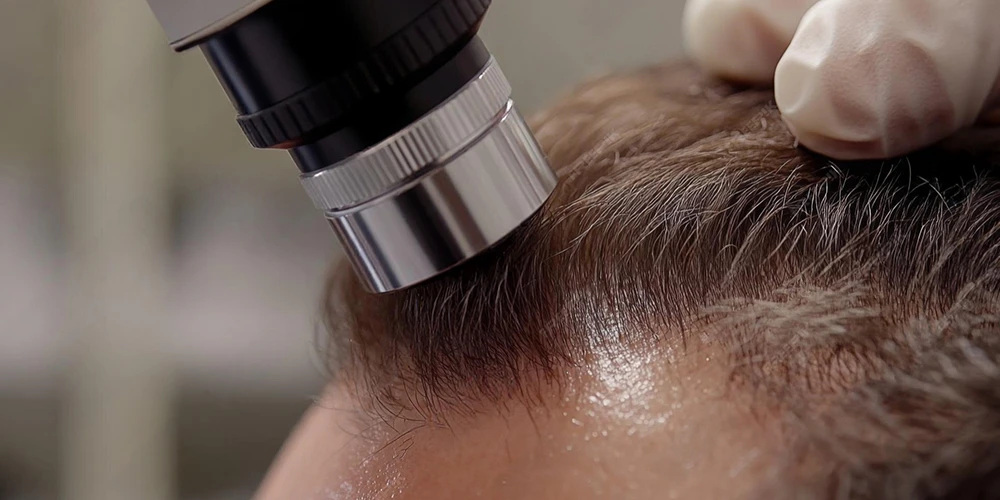
- Do I need to see a dermatologist or a surgeon to make this decision? The ideal choice is to visit a comprehensive hair restoration clinic in İstanbul that employs both. These clinics can offer an unbiased opinion. A dermatologist can perform a detailed scalp analysis (trichoscopy) to assess the health of your follicles, while a surgeon can evaluate your donor area and potential for a transplant. This dual expertise ensures you get the most accurate recommendation.

 English
  Italian
  French
  German
  Arabic