The “No-Shave” DHI Transplant in İstanbul: Is This ‘Hidden’ Procedure Right for You?
In the world of hair restoration, the “no-shave” hair transplant is one of the most appealing concepts. The dream is simple: undergo a life-changing procedure, restore your hair, and return to work or social life within days, with no one being the wiser.
Thanks to the advanced
DHI (Direct Hair Implantation) technique, this level of discretion is now a reality. But is this “hidden” procedure a realistic option for
every patient who walks into a clinic in İstanbul, or is it a marketing promise that comes with compromises? This expert guide will provide an honest, clinical answer to one of the most frequently asked questions in hair transplantation.
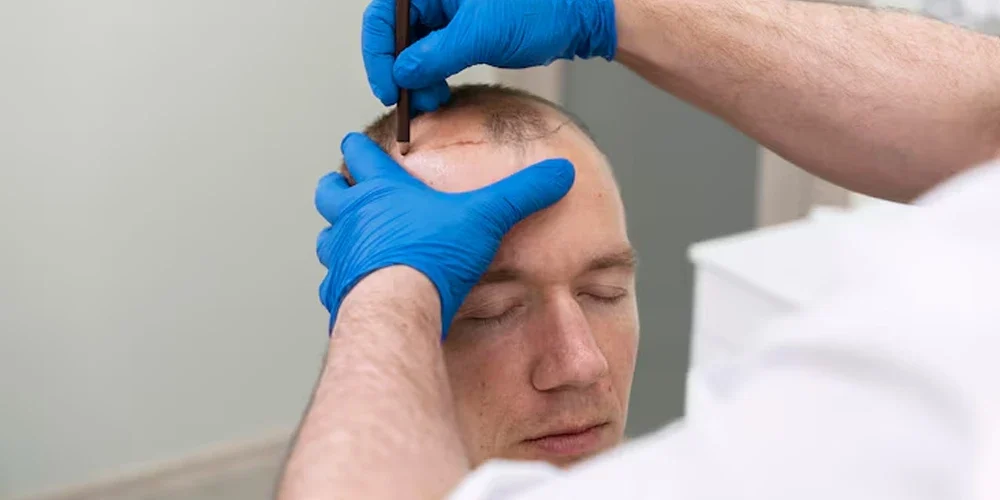
What is a “No-Shave” DHI Transplant (and What is it Not)?
First, it is important to clarify the terminology. A true “no-shave” procedure is not a completely different surgery, but rather a modification of the DHI technique that prioritizes discretion above all else.
The “Full Unshaven” vs. The “Partial Shave” (The Reality)
A “full unshaven” procedure, where not a single hair is trimmed, is extremely rare and only possible for patients needing a very low number of grafts (e.g., under 500-1000) for a small area. The much more common, and far more practical, method referred to as a “no-shave” transplant is actually a
“partial shave” method. This works in two ways:
- The Recipient Area (Top) is Unshaven: The top of your head, where you are receiving the new hairs, is left completely unshaven.
- The Donor Area (Back) is Partially Shaved: The surgeon creates a small, rectangular “window” or patch in your donor area (at the back of your head), which is then shaved. The surrounding long hair is left untouched and can be combed down to perfectly conceal this small, shaved patch.
Why DHI is the Key Technology
This procedure is only possible because of the specific tool used in DHI: the
Choi Implanter Pen. This sophisticated, pen-like instrument holds the graft in its hollow needle. It allows the surgeon to precisely and gently insert the needle
between existing long hairs to implant the new graft without damaging the surrounding, non-shaved follicles. This is a level of precision that a traditional
FUE (Sapphire) procedure cannot offer, as FUE requires a clear, shaved view of the entire scalp to pre-make all the incisions.
The Big Question: Is It Possible for Every Patient?
The short, direct, and honest answer is
no. The no-shave DHI procedure is a highly specialized technique that is only suitable for a specific set of candidates. A reputable clinic in İstanbul will not promise it to everyone; they will perform a careful assessment to see if you are a good fit. General information on candidacy for any hair transplant can be found on resources from international bodies like the
American Academy of Dermatology (AAD).
Who is the IDEAL Candidate for a “No-Shave” DHI?
Patients Needing Low to Moderate Graft Numbers
The no-shave DHI technique is extremely meticulous and much slower than a standard procedure. It is not designed for “mega-sessions.” It is the perfect solution for patients who need a low to moderate number of grafts, typically in the
1,000 to 2,500 graft range, to add density to thinning areas.
Patients with Existing Long Hair (Top and Back)
This is a non-negotiable requirement. The entire concept relies on you having long hair. You must have sufficient long hair on top to hide the newly implanted grafts, and you must have long hair at the back of your head to cover the shaved donor “window.” This procedure is not an option for men who already have a short buzz cut or crew cut.
Patients with Diffuse Thinning or Hairline Reinforcement
The ideal case is a patient who is not completely bald but has experienced diffuse thinning, where their hair is noticeably less dense than it used to be. The DHI pen is perfect for carefully inserting new grafts between these existing hairs to boost volume. It is also excellent for reinforcing a hairline that has started to recede, as long as the hair behind it is long.
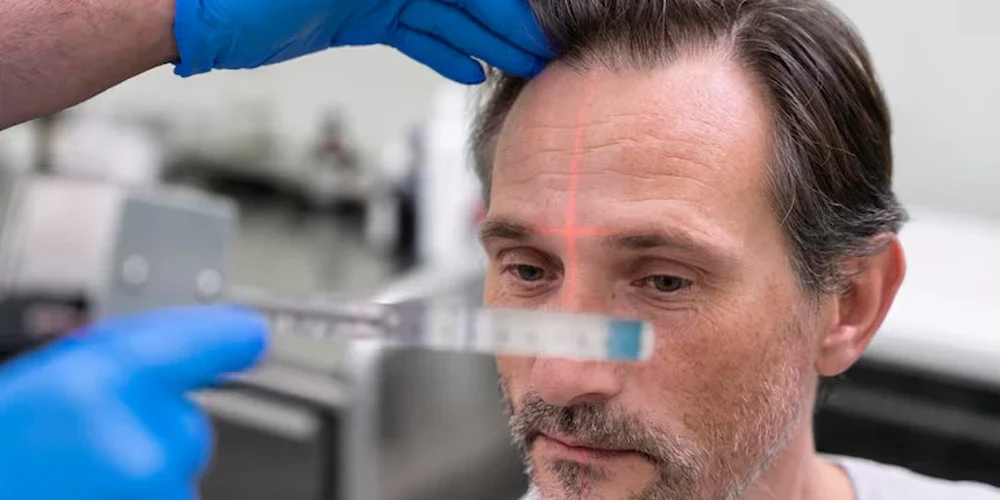
Patients Who Prioritize Discretion Above All Else
The number one reason to choose this procedure is discretion. The ideal candidate is often a public figure, a business executive, or anyone who simply cannot or does not want to take time off work or alert their social circle that they have had a procedure. It allows for a return to normal life, often within just a few days, without the obvious sign of a fully shaved head.
Who is NOT a Good Candidate for a “No-Shave” DHI?
Patients Requiring a “Mega-Session”
If you have advanced hair loss (e.g., a Norwood scale 5-7) and require a large number of grafts (3,500+), a no-shave approach is not practical, efficient, or recommended. Attempting to do so would take an exceptionally long time, which can risk the health of the grafts. For these cases, a full shave is necessary to achieve the best, most dense result.
Patients with Very Short Hair
As mentioned, if your hair is already short, there is nothing to conceal the shaved donor area or the work done in the recipient area, which completely defeats the purpose of the procedure.
Why Choose İstanbul for This Highly Specialized Technique?
Unmatched Mastery of the DHI Choi Pen
A no-shave DHI transplant is one of the most technically demanding and delicate procedures in hair restoration. It requires a level of patience, precision, and skill that can only be acquired through extensive experience. İstanbul’s DHI specialists, due to the high volume of international patients, have this mastery. They have spent thousands of hours perfecting the art of implanting grafts between existing hairs without causing damage—a skill that is rare and highly valued.
The Honest Consultation: The Best Clinics Will Tell You “No”
A key advantage of choosing a top-tier İstanbul clinic is their experience and honesty. A reputable surgeon’s first priority is a good result, not a sale. During your
consultation, they will be honest and tell you if you are not a good candidate for the no-shave method. They will recommend a full shave if it means a safer procedure and a better, denser final result. This transparency is a sign of a high-quality, trustworthy clinic.
Conclusion: A Powerful Option, But Not a Universal Solution
The “No-Shave” DHI transplant is a fantastic, cutting-edge option that offers unparalleled discretion for the
right candidate. It is the perfect solution for those with long hair who need low-to-moderate density and who place a high premium on privacy. However, it is not a universal solution for every patient. The most important step in your journey is a professional, honest consultation with an experienced DHI specialist in İstanbul to determine if this highly specialized procedure is the right choice for your specific needs and hair loss pattern.
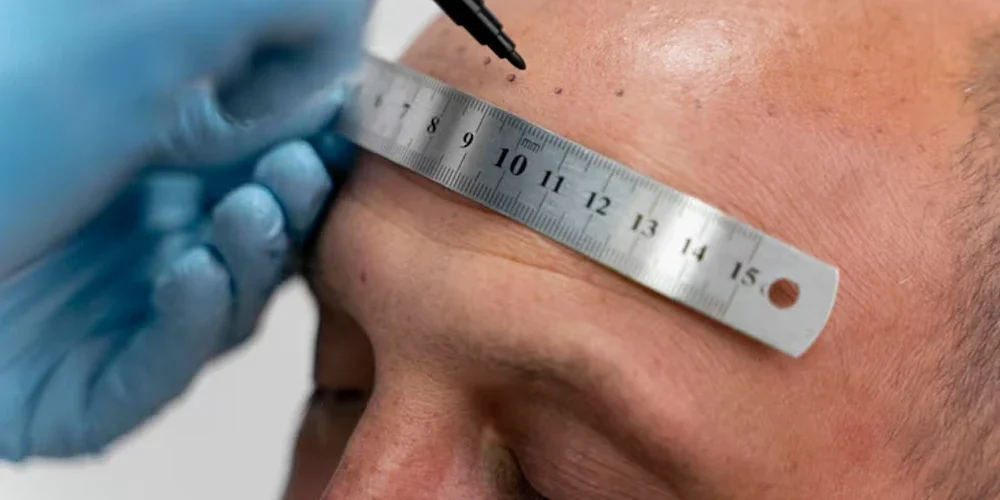
Frequently Asked Questions (FAQ)
- Is the “partial shave” in the donor area noticeable?
Answer: If you have long hair (at least 2-3 inches), it is not noticeable at all. The hair from above the shaved “window” is simply combed down to cover it completely, making it invisible.
- Is the recovery for a no-shave DHI faster?
Answer: The physical recovery is the same. However, the social recovery is much faster because the procedure is visually concealed. You still must follow all post-op care, including the gentle washing routines, as outlined by organizations like the International Society of Hair Restoration Surgery (ISHRS).
- Is a no-shave DHI transplant more expensive?
Answer: Yes, it is almost always more expensive than a standard procedure. This is because it is a much slower, more meticulous, and more labor-intensive technique for the surgical team, requiring a higher level of skill and more time to perform safely and effectively.
- Does the “no-shave” method have a lower success rate?
Answer: In the hands of a skilled DHI specialist, the success rate and graft survival should be just as high as a standard procedure. The risk of a lower success rate comes from an inexperienced surgeon attempting the technique and damaging existing follicles, which is why choosing a specialist is so critical.
- Can I get a “no-shave” transplant with the FUE (Sapphire) technique?
Answer: No. The FUE/Sapphire technique requires the surgeon to pre-make all the incisions (canals) first. To do this with precision and without damaging existing hair, the entire recipient area must be shaved and clearly visible. The no-shave approach is a specialty of the DHI technique.


 English
  Italian
  French
  German
  Arabic