


Hair loss can be a distressing experience that affects both men and women. While factors like genetics and aging are well known, thyroid and hair loss issues are often interconnected, as an imbalance in thyroid hormones can have a significant impact on your hair’s health and growth cycle, resulting in noticeable thinning or shedding.
Table of Contents
ToggleThis article explores the intricate link between hair loss and thyroid disorders, explaining how thyroid function affects hair. We’ll also discuss the warning signs you should look out for and review the available treatment options. At Istanbul Hair Institute, we specialize in diagnosing and treating various forms of hair loss, including those related to underlying conditions like thyroid imbalances. Let’s uncover how to restore both your thyroid health and your hair.
How Does Your Thyroid Affect Hair Growth?
Your thyroid is a small, butterfly-shaped gland in your neck that plays a significant role in the health and growth of your hair. It produces hormones that regulate your body’s metabolism, and these hormones directly impact your hair follicles. The key thyroid hormones, thyroxine (T4) and triiodothyronine (T3), influence the hair growth cycle by affecting the rate at which your hair grows, rests, and sheds.
When your thyroid functions normally, these hormones help maintain a healthy, balanced hair cycle. However, both an underactive thyroid (hypothyroidism) and an overactive thyroid (hyperthyroidism) can disrupt this delicate balance.
- In hypothyroidism, low levels of thyroid hormone can slow down many bodily processes, including hair growth, and may cause the cycle to shift prematurely to the shedding phase.
- On the other hand, hyperthyroidism can also negatively impact hair condition and lead to hair loss.
Because the health of your hair is closely linked to your thyroid function, changes in your hair may reflect underlying thyroid issues.

Recognizing Thyroid-Related Hair Loss: Symptoms and Signs
Hair loss can be distressing, and identifying its underlying cause is key to finding the right treatment. While many factors can contribute to hair loss, the connection between the thyroid and hair loss is common, but often missed. Often, thyroid-related hair loss presents as diffuse thinning across the entire scalp rather than distinct bald patches. You may notice increased shedding when brushing or washing your hair, along with a general decrease in hair volume and thickness.
In addition to thinning, thyroid issues can affect the overall condition of your hair, leading to:
- Dryness: Hair may become dry, coarse, and brittle.
- Brittleness: Increased susceptibility to breakage and split ends.
- Texture Changes: Hair might change in texture; for example, straight hair could become wavy, or curly hair might lose its curl.
- Loss of the Outer Third of the Eyebrow: A classic sign of thyroid imbalance.
- Slow Hair Growth: A reduced rate of hair regeneration.
How Do You Know If Hair Loss Is from Thyroid?
Determining whether hair loss is due to a thyroid issue requires professional evaluation. Since the thyroid affects many bodily functions, you are likely to experience other symptoms alongside hair changes. Common signs of thyroid disorders include:
- Fatigue: Persistent tiredness and low energy.
- Weight Changes: Unexplained weight gain in hypothyroidism or weight loss in hyperthyroidism.
- Temperature Sensitivity: Feeling unusually cold in hypothyroidism or hot in hyperthyroidism.
- Changes in Heart Rate: A slow heart rate with hypothyroidism or a rapid one with hyperthyroidism.
- Mood Changes: Depression, anxiety, or irritability.
- Dry Skin
- Digestive Changes: Constipation or diarrhea.
- Muscle Weakness
- Menstrual Changes: Irregular cycles or heavy periods.
Experiencing these symptoms does not automatically confirm a thyroid problem, but if you notice a combination of hair loss and other signs, it’s important to consult a doctor. A healthcare professional can conduct a proper evaluation and order blood tests to measure thyroid hormone levels. Based on the results, they may refer you to an endocrinologist for further diagnosis and treatment.

Types of Thyroid Disorders and Their Impact on Hair
Thyroid disorders can have a significant effect on hair growth. The two main types to consider are hypothyroidism, where the thyroid is underactive, and hyperthyroidism, where the thyroid is overactive.
1. Hypothyroidism
Hypothyroidism occurs when the thyroid gland does not produce enough hormones. This condition slows down many bodily processes, including hair growth. Hashimoto’s thyroiditis is the most common cause of hypothyroidism in developed countries. When thyroid hormone levels are low, hair follicles may remain in the resting (telogen) phase for longer periods, leading to increased shedding and a noticeable reduction in hair volume. In addition, the hair may become dry, brittle, and coarse.
2. Hyperthyroidism
Hyperthyroidism, on the other hand, happens when the thyroid gland produces an excess of hormones. This accelerates many bodily processes and can also disrupt the hair growth cycle. Graves’ disease is the most common cause of hyperthyroidism. In this condition, the rapid turnover of the hair cycle can cause the hair to thin, become finer, and more brittle.
Key Distinction:
Both too little and too much thyroid hormone can negatively impact hair growth. Obtaining the correct diagnosis and treatment for your specific thyroid condition is essential. Managing your thyroid issues is the first step toward addressing thyroid-related hair loss, and your doctor is best suited to help guide you through this process.
Diagnosis: Getting to the Root of the Problem
If you are experiencing unexplained hair loss and suspect a thyroid issue, seeing a doctor is essential. An endocrinologist or a dermatologist can help determine the cause. A proper diagnosis is the first step toward effective treatment.
The Diagnostic Process:
- Medical History and Physical Exam:
Your doctor will ask about your symptoms, personal and family history of thyroid problems, and any medications you are taking. A thorough physical examination will also be conducted. - Blood Tests:
Blood tests are key for diagnosing thyroid disorders. These tests measure the levels of thyroid hormones in your blood, including:- TSH (Thyroid-Stimulating Hormone): Often the first test performed. An abnormal TSH level can indicate that your thyroid is either overactive or underactive.
- T3 (Triiodothyronine) and T4 (Thyroxine): These are the main thyroid hormones. Their levels help determine the specific type and severity of the thyroid disorder.
- Other Tests:
Depending on your symptoms and initial results, further tests may be ordered to rule out other causes of hair loss or to evaluate the overall health of your thyroid gland.
An accurate diagnosis is crucial for developing an effective treatment plan that addresses both your thyroid condition and the associated hair loss.
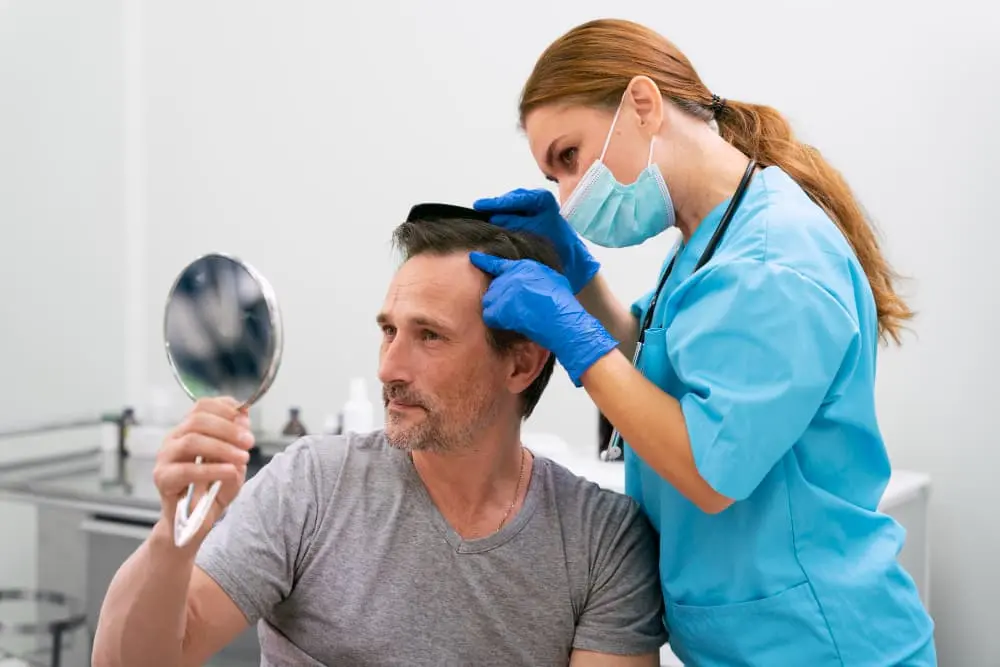
Treatment Options: Restoring Thyroid Balance and Hair Growth
If your hair loss is linked to a thyroid disorder, the first step is to restore normal thyroid hormone levels. Treating the underlying thyroid condition is essential for managing hair loss related to thyroid issues.
How Can I Stop Hair Loss from Thyroid?
The most effective approach to stopping hair loss caused by thyroid issues is to treat the thyroid imbalance itself. Whether you have an underactive thyroid (hypothyroidism) or an overactive thyroid (hyperthyroidism), addressing the root cause is key. You cannot resolve thyroid-related hair loss without first restoring proper thyroid function.
Hypothyroidism Treatment:
- The standard treatment involves thyroid hormone replacement therapy with a daily oral medication.
- This synthetic form of the T4 hormone helps restore normal hormone levels, which in turn can improve hair growth.
Hyperthyroidism Treatment:
Treatment for hyperthyroidism is more varied and may include:
- Antithyroid medications that reduce the amount of hormones produced by the thyroid gland.
- Radioactive iodine treatment that shrinks the thyroid gland, thereby reducing hormone production.
- Surgery to remove part or all of the thyroid gland in more severe cases.
How Do You Fix Thyroid Hair Loss?
Once your thyroid hormone levels are normalized, hair regrowth is often possible. It is important to be patient as it may take several months to see significant improvement. In some cases, hair loss may not fully reverse even after treatment. If you experience incomplete regrowth or require additional support, consider these hair restoration options:
- PRP (Platelet-Rich Plasma) Therapy: Involves injecting a concentrated solution of your own platelets into the scalp to stimulate hair follicles.
- Mesotherapy: A treatment that uses injections of vitamins, minerals, and other nutrients directly into the scalp to nourish hair follicles.
- Hair Transplantation: For cases of significant and irreversible hair loss, this surgical option can help restore a fuller head of hair.
The good news is that for many, restoring thyroid balance leads to substantial hair regrowth. With proper treatment and a supportive hair restoration plan, you can often improve the health and appearance of your hair. It is a good idea to seek professional assistance to tailor the right treatment for your specific needs.
Will Hair Grow Back After Thyroid Treatment?
One of the most common concerns for those experiencing hair loss due to thyroid issues is whether their hair will eventually grow back. The good news is that in many cases, hair will regrow once the underlying thyroid and hair loss issues are addressed and hormone levels return to normal. Restoring balance to your thyroid often allows the hair follicles to resume their normal growth cycle.
Will Hair Grow Back from Thyroid Loss?
When thyroid imbalances are corrected, many people notice new hair growth within 3 to 6 months. However, it is important to be patient as significant improvement in hair density can take several months. In some instances, particularly if the thyroid condition was severe, prolonged, or left untreated for an extended period, hair loss may be permanent or regrowth may be incomplete. In these cases, additional hair restoration treatments such as PRP or mesotherapy may help stimulate growth and improve hair density after thyroid levels have normalized.

 English
  Italian
  French
  German
  Arabic