
Medically reviewed by Dr. Handan Yavuz, MD Last reviewed:
At a Glance
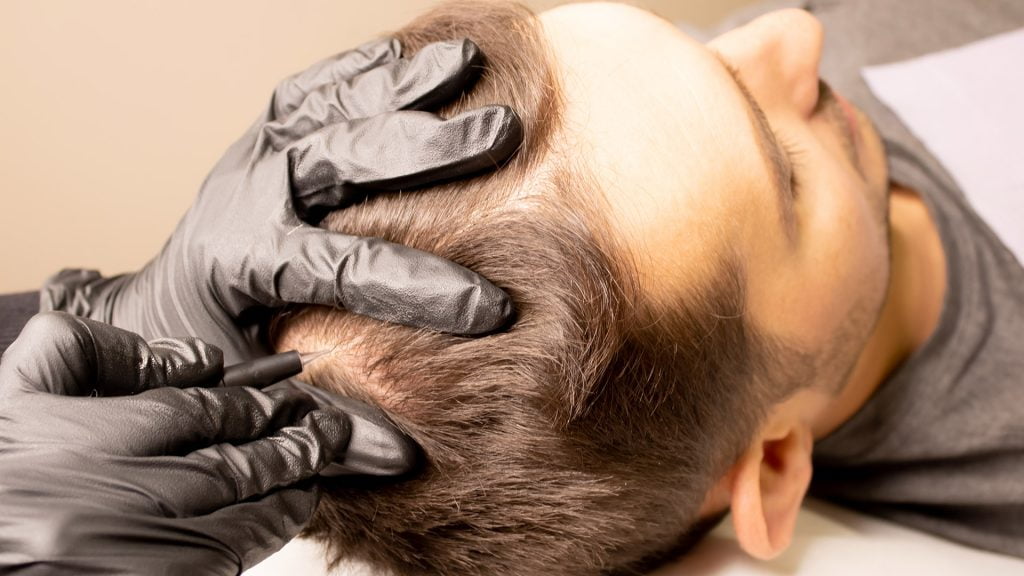
Medical scalp pigmentation is a non-surgical procedure in which small dots of non-permanent, biodegradable pigment are placed in the outer layers of the scalp skin with an ultra-thin needle to create the appearance of a fuller head of hair. It usually takes 2 sessions about 1 month apart, each lasting approximately 2–6 hours, with topical local anesthesia for comfort. Unlike a traditional tattoo, the pigment fades over time and eventually disappears.
- Number of sessions
- Usually 2, about 1 month apart
- Session time
- Approximately 2–6 hours
- Anesthesia
- Topical local anesthesia
- Pigments
- Non-permanent, biodegradable organic pigments
- Scar camouflage
- May need 1–2 additional sessions
- Durability
- Fades over time and eventually disappears
Medical Scalp Pigmentation
How to Keep Your Hair Healthy?
Dr. Handan Yavuz Providing Tips for Healthier Hair
Medical Scalp Pigmentation Advantages Over Traditional Tattoos
- No use of permanent pigments
- No fading to blue
- Biodegradable inks used
- Pigments are not applied deeply, preventing ‘bleeding’ of the pigments
- Topical local anesthesia used for the comfort of people during the treatment
- Low risk of scarring
- Immediate result
Get Your Free Hair Consultation
Share your questions with our team; we will get back to you to plan your consultation with Dr. Handan Yavuz.
What Does It Do?
- Give the look of a full, youthful head of cropped hair
- Simulate a full-front, side and/or rear hairline
- Restore hairlines on part-bald or fully bald heads
- Camouflage the visible signs of all levels of alopecia
- Camouflage scarring resulting from previous hair transplant surgery
- Hide scars, burns and birthmarks
Boost the visual effect of a hair transplant
Who Is It Suitable For?
Medical scalp pigmentation can be considered for:
- People with advanced hair loss who prefer the look of a closely cropped head of hair
- People with thinning hair who want to reduce the contrast between hair and scalp
- People with scars from previous hair transplant surgery, injuries or burns, or with birthmarks, that they want to camouflage
- Hair transplant patients who want to add visual density to the transplanted area
It is a cosmetic camouflage: it does not treat the cause of hair loss or regrow hair. If your hair loss is still progressing, your doctor may first recommend investigating and treating its cause, for example with a full hair check-up.
How the Treatment Works
After topical local anesthesia, the practitioner uses an ultra-thin needle to place tiny dots of pigment in the outer layers of the skin, matched to your hair color and the hairline planned with you. The first session lays down a light base; at the second session, about a month later, the color and density are completed. Because the pigments are placed more superficially than tattoo ink and are biodegradable, they fade gradually, so touch-up sessions are needed over time to keep the result.
How Many Sessions Are Needed?
Most clients need 2 sessions, each lasting approximately 2–6 hours depending on the area and individual requirements. Areas with scar tissue are harder to work with and may need one or two additional sessions to achieve good camouflage. Because the pigment is designed to fade, the result is not permanent, and further sessions are planned when the color starts to lighten.
What to Expect After Treatment
The result is visible immediately, although the dots look lighter and unfinished after the first session. The scalp may look slightly red for a short time after each session. Your practitioner will give you aftercare instructions, which usually include keeping the scalp dry and avoiding sun exposure, swimming and heavy sweating for the first few days so that the pigment settles evenly.
Risks and Possible Side Effects
Common temporary effects include redness, mild swelling, tenderness and pinpoint bleeding during or shortly after the session. Less common complications include infection, an allergic reaction to the pigment, uneven color, dots that spread or look too large, and a result that does not match your expectations. Results depend on your skin type and how your skin heals, and scarred skin may need extra sessions. Your doctor reviews your medical history, skin condition and expectations before confirming that the procedure is suitable for you.
Sources
This page draws on the following independent medical sources; whether a treatment suits you is assessed individually during consultation.
Get Your Free Hair Consultation
Share your questions with our team; we will get back to you to plan your consultation with Dr. Handan Yavuz.
 English
 Italian
 French
 German
 Arabic